Foot and Ankle Disorders

The foot and ankle section of your body is a complex structure of bones and joints held together by over 100 muscles, tendons, and ligaments. With 26 bones and 33 small joints, it takes the entire load of the body and is most vulnerable to wear & tear; especially in people who are physically very active.

Bunion correction

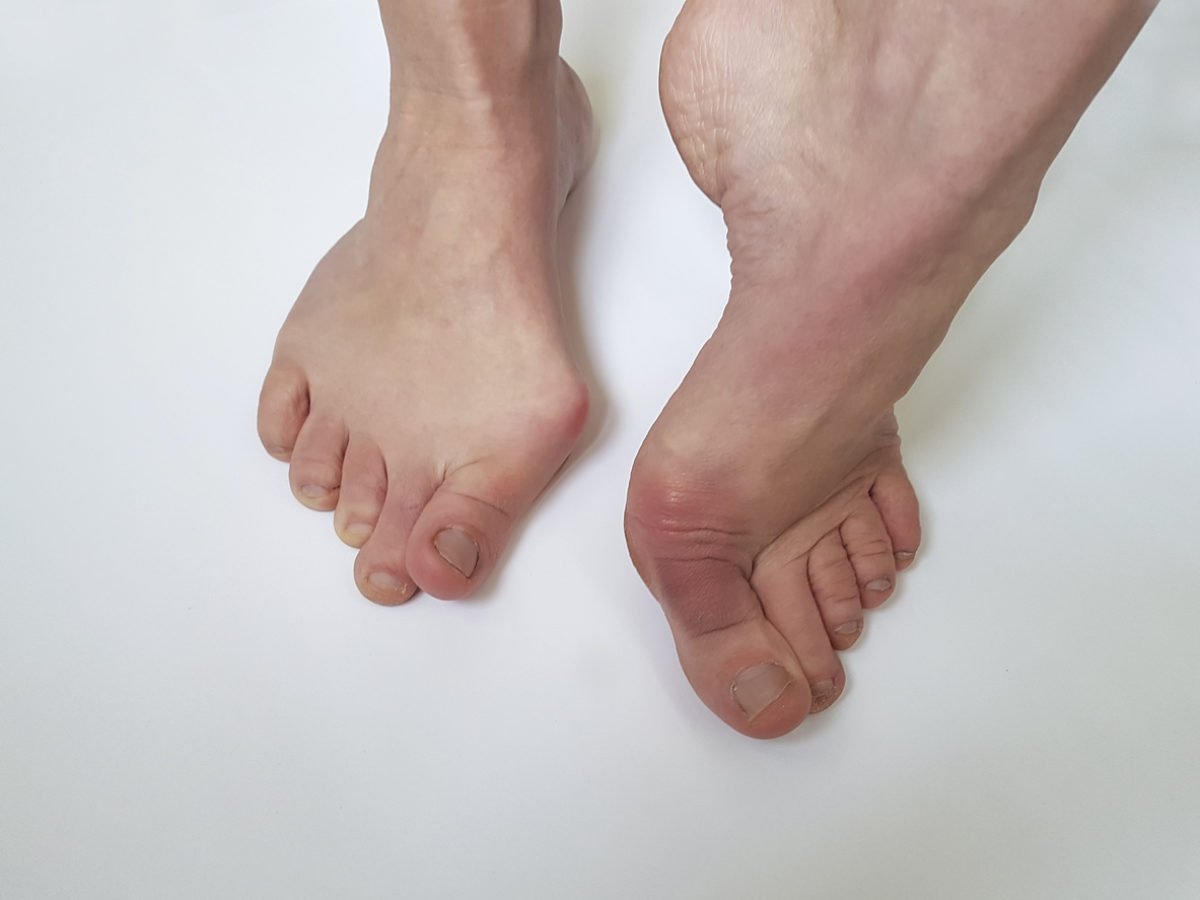
A bunion is a bony prominence on the inner aspect of the base of the big toe. Bunions are extremely common in the United Kingdom. The cause of bunions remains uncertain although they seem to be more common in families where bunions are prevalent and there is some evidence to suggest that wearing narrow shoes may also be a cause. A large number of patients with bunions do not require surgical treatment. It is only when they become painful and when conservative treatment is unsuccessful that surgery should be considered.

Bunions normally coexist with hallux valgus; a condition characterised by the big toe drifting off towards the second toe. Provided that there is no arthritis in the big toe joint, surgical treatment for bunions involves removing the bony prominence and also correcting the associated hallux valgus deformity by cutting and realigning the bone; an operation known as an osteotomy.

There are three different type of osteotomies ; the chevron, the scarf and the basal osteotomies to treat the spectrum of bunion deformities which all have good results in the scientific literature. The type of osteotomy recommended is dependent on how severe the deformity is.
orthopedic-trauma
Lesser toe deformities

These are common deformities that often present with the affected toe being painful and rubbing on shoes or the neighbouring toe. Surgical correction is indicated if conservative measures fail. The correction recommended depends on the nature of the deformity which may be of two types; flexable or fixed.

For a flexable deformity, when the toe can be easily corrected, a soft tissue procedure is recommended. The soft tissue procedure performed depends on the position of the toe but would involve either a tenotomy (tendon release), a tendon lengthening, a capsulotomy (soft tissue joint release), or tendon transfer (reattaching one tendon to another).

Heel pain (Plantar Fascitis)

Plantar fasciitis is a common cause of heel pain which typically presents at the base of the heel and is worse in the morning. It is normally self limiting but may take 18 months to resolve. Conservative treatment involves pain killers, heel pads and physio. Night splints, steroid injections and ultrasoundtherapy may also be helpful. Surgical treatment involves the release of the plantar fascia, although this is rarely necessary.

Arthritis of the foot and ankle

There are many different types of arthritis that may affect joints; osteoarthritis and rheumatoid arthritis are the two commonest seen in the foot and ankle. Osteoarthritis refers to a degenerative loss of cartilage that normally lines the joint. It is seen as patients get older or may be a result of a previous injury that has disrupted the joint.

Rheumatoid arthritis is an inflammatory condition that causes destruction of bone and cartilage. Both conditions commonly present with pain, swelling and reduced mobility. If the pain is severe and does not respond to conservative measures, then surgery is considered. The options of surgical intervention for arthritis of the foot and ankle include:

Steriod/local anasathic injection

This may be helpful in rheumatoid disease or osteoarthritis of the big toe joint but it is unlikely to provide long lasting pain relief.

Cheilectomy

Performed for the big toe where the upper part of the arthritic joint is removed.

Arthoroscopy with debridement

Useful for osteochondral defects and tears in the cartilage in the ankle joint which may be curetted or shaved.

Fusion

It involves the refashioning and subsequent stiffening of the joint with high levels of patient satisfaction when correctly performed.

Trauma

Treatment for all fractures of the foot and ankle including calcaneal, pilon and lisfranc injuries.

Treatment of sports injuries of the foot and ankle

Treatment for all sports injuries of the foot and ankle including chronic ankle sprains, chondral/osteochondral defects of the ankle, midfoot sprains, stress fractures, sesamoid injuries, freibergs disease and nerve entrapment syndromes.

Frequently Asked Questions

Bunion surgery is done to reduce the pain and correct the deformity caused by a bunion. A bunion (hallux valgus) is an enlargement of the bone or tissue around a joint at the base of the big toe or at the base of the little toe. This one is called a "bunionette" or "tailor's bunion." Bunions often form when the joint is stressed over a prolonged period. Most bunions form in women, primarily because women may be more likely to wear tight, pointed, and confining shoes. Bunions may be inherited as a family trait. Bunions may also result from arthritis. This often affects the big toe joint.

  • Mild bunion. For this type of surgery, the surgeon may remove the enlarged portion of bone and realign the muscles, tendons, and ligaments surrounding the joint.
  • Moderate bunion. For a moderate bunion, the surgeon may cut the bone and shift it to its proper position. Whether or not the bone is cut depends on the severity and location of the deformity. In addition, the surrounding tendons and ligaments may need to be repositioned.
  • Severe bunion. For a severe bunion, surgery may involve removing the enlarged portion of the bone, cutting and realigning the bone, and correcting the position of the tendons and ligaments.
  • Arthritic bunion or big toe joint. If the joint is damaged beyond repair, as is often seen in arthritis, it may need to be fused. This allows the bones to heal together and eliminate movement and pain. Occasionally, joint replacement implants may be used in the reconstruction of the big toe joint.
You may need bunion surgery if you have severe foot pain that happens even when walking or wearing flat, comfortable shoes. Surgery may also be needed when chronic big toe inflammation and swelling isn't relieved with rest or medicines.
As with any surgical procedure, complications can happen. Some possible complications may include:
  • Stiffness
  • Numbness
  • Swelling
  • Delayed healing
  • Infection
  • Your healthcare provider will explain the procedure to you and offer you the chance to ask any questions that you might have about the procedure.
  • You will be asked to sign a consent form that gives your permission to do the procedure. Read the form carefully and ask questions if something is not clear.
  • In addition to a complete medical history, your healthcare provider may perform a complete physical exam to make sure that you are in good health before undergoing the procedure. You may undergo blood tests or other diagnostic tests.
  • Tell your healthcare provider if you are sensitive to or are allergic to any medicines, latex, tape, and anesthetic agents (local and general).
  • Tell your healthcare provider of all medicines (prescribed and over-the-counter) and herbal supplements that you are taking.
  • Tell your healthcare provider if you have a history of bleeding disorders or if you are taking any anticoagulant (blood-thinning) medicines, aspirin, or other medicines that affect blood clotting. It may be necessary for you to stop these medicines before the procedure.
  • If you are pregnant or suspect that you are pregnant, you should notify your healthcare provider.
  • You may be asked to fast for 8 hours before the procedure, generally after midnight.
  • You may receive a sedative before the procedure to help you relax. Because the sedative may make you drowsy, you will need to arrange for someone to drive you home.
  • Based on your medical condition, your healthcare provider may request other specific preparation.